
HomeIf You’ve Ever Seen One of These Under a Stoops, Here’s What It Means
If You’ve Ever Seen One of These Under a Stoops, Here’s What It Means
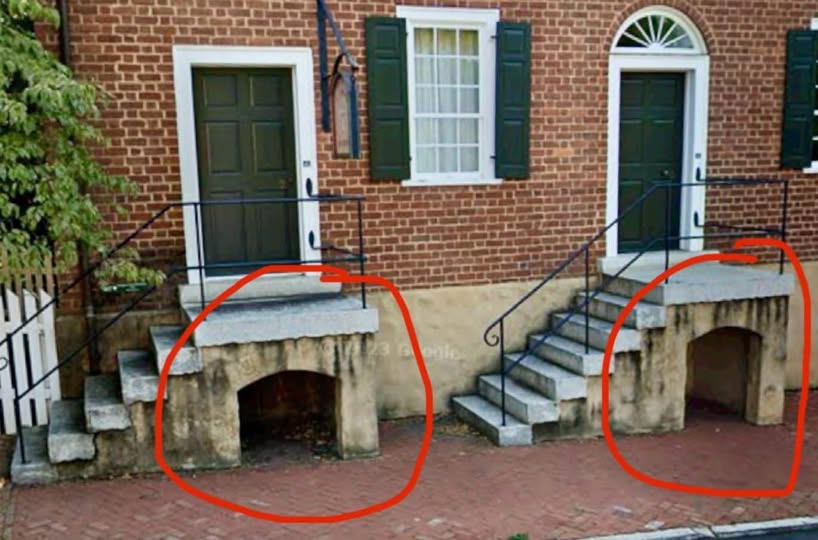
If you’ve ever strolled through historic neighborhoods in Charleston, Philadelphia, Brooklyn, Boston, or New York City and noticed a bricked-in archway, a metal-grated sunken space, or a small underground chamber beneath the front stoop of a rowhouse, you’ve stumbled upon a stoop vault—also called an areaway or under-stoop vault.
These quiet, often overlooked features aren’t architectural quirks or forgotten basements. They were functional, clever solutions to everyday urban life in the 18th and 19th centuries—and they tell a story of privacy, commerce, and domestic efficiency.
🏛️ What Was a Stoop Vault Used For?
1. Coal & Fuel Storage
Before central heating, homes burned coal or wood for warmth and cooking. Deliveries came by horse-drawn wagon, and coal was dumped directly into the vault through a street-level grate.
Why underground? It kept fuel dry, out of sight, and away from living spaces (coal is dusty and smelly!).
Access: A small door or hatch inside the basement or cellar led to the vault for easy retrieval.
2. Milk & Ice Delivery (Early “Refrigeration”)
In the days before refrigerators, milkmen and icemen would leave bottles of milk or blocks of ice in the vault overnight.
The cool, shaded, below-ground space kept perishables cold longer than a doorstep.
Homeowners could retrieve them in the morning without the delivery person entering the house.
3. Privacy & Security
Rowhouses were built shoulder-to-shoulder, with little space between them. The stoop vault allowed for discreet service access—keeping deliveries (and strangers) off the main floor and away from family life.
4. Extra Storage
Some vaults held firewood, potatoes, root vegetables, or even wine—anything that benefited from a cool, dark, dry environment.
🧱 Why Are They Bricked Up or Grated Now?
Safety: Open vaults became tripping hazards or hiding spots.
Decline of coal/ice delivery: With modern utilities, the vaults lost their purpose.
Urban renewal: Many were sealed during renovations or sidewalk upgrades.
Preservation: In historic districts, original grates or arches are often retained for architectural integrity—even if no longer functional.
📍 Where to Spot Them Today
Charleston, SC: Look for raised “Carolina” stoops with iron grates at the base—often hiding vaults used for flood protection and storage.
Philadelphia: Many rowhouses in Society Hill and Old City have visible areaways.
New York City: Brownstones in Brooklyn Heights and Harlem frequently feature bricked-up vaults beneath stoops.
Boston: North End and Beacon Hill homes sometimes retain original vault grates.
❤️ The Bigger Picture
Stoop vaults are a quiet testament to how cities adapted to daily life before modern conveniences. They reflect a time when every inch of urban space was optimized, and service was designed to be invisible to the family inside.
Today, these vaults are mostly silent relics—but they’re also hidden time capsules of domestic ingenuity.
“The past isn’t gone—it’s just under your feet.” 🏠✨
ADVERTISEMENT
