
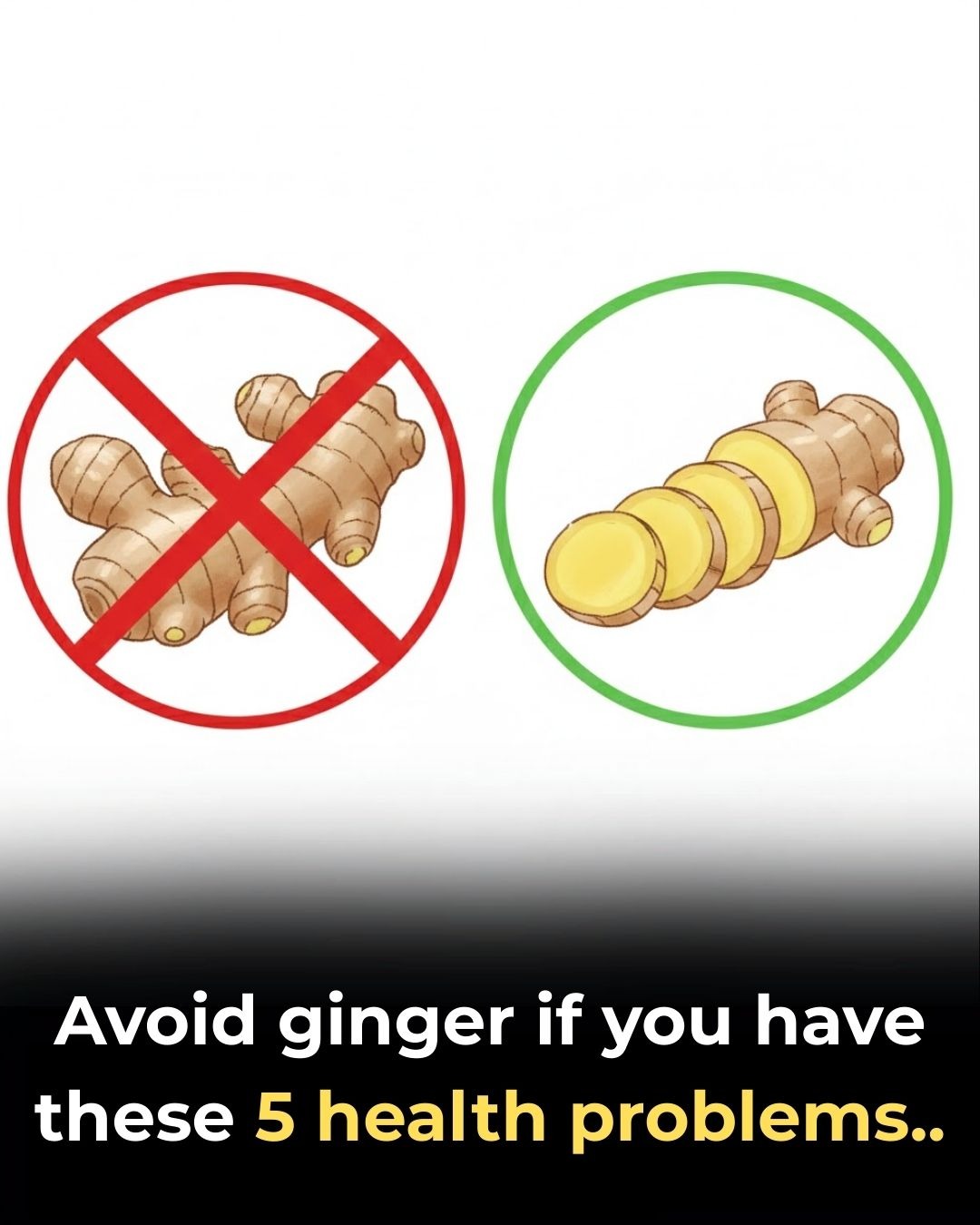
Ginger is widely praised for its anti-inflammatory properties, digestive benefits, and ability to ease nausea—but it’s not safe for everyone. While it’s generally well-tolerated in culinary amounts (like in tea or stir-fries), medicinal doses (supplements, extracts, or large daily servings) can interact with certain health conditions or medications.
Here are 5 situations where you should use caution—or avoid ginger altogether—based on current medical evidence.
⚠️ 1. Bleeding Disorders or Taking Blood Thinners
Why: Ginger contains salicylates (natural compounds similar to aspirin) that may slow blood clotting.
Risk: Increased bruising or bleeding, especially when combined with:
Warfarin (Coumadin)
Aspirin
Clopidogrel (Plavix)
NSAIDs (like ibuprofen)
✅ What to do: If you’re on blood thinners or have hemophilia, avoid ginger supplements and limit dietary ginger to small culinary amounts (e.g., ¼ tsp in cooking). Always consult your doctor.
⚠️ 2. Gallstone Disease
Why: Ginger may stimulate bile production, which can trigger pain or complications if you have gallstones.
Risk: Bile flow can cause stones to block ducts, leading to severe abdominal pain (biliary colic).
✅ What to do: If you’ve been diagnosed with gallstones, avoid concentrated ginger (tea, capsules, shots). Small amounts in food are usually fine—but check with your gastroenterologist.
⚠️ 3. Low Blood Pressure (Hypotension)
Why: Ginger may lower blood pressure further, especially in high doses.
Risk: Dizziness, fainting, or fatigue in people already prone to low BP.
✅ What to do: Monitor your blood pressure if consuming ginger regularly. Avoid ginger \
- SEE NEXT PAGE
ADVERTISEMENT
