
High in resistant starch, which supports gut health and helps control blood sugar.
Rich in fiber for digestive regularity.
Contains vitamin B6, essential for metabolism and brain health.
2. The Ripe Stage: Bright Yellow with Few Spots — Naturally Sweet
This is the banana’s most popular stage — soft, sweet, and easy to digest. It’s perfect for an on-the-go snack or an energy boost before or after exercise.
Best Uses: Eating raw, topping cereals or oatmeal, blending into smoothies.
Health Benefits:
Great source of potassium, which helps regulate blood pressure and supports heart health.
Provides natural energy from simple sugars (glucose, fructose, and sucrose).
Contains antioxidants like dopamine and catechins that combat free radicals.
3. The Very Ripe Stage: Spotted to Brown — Sweetest and Softest
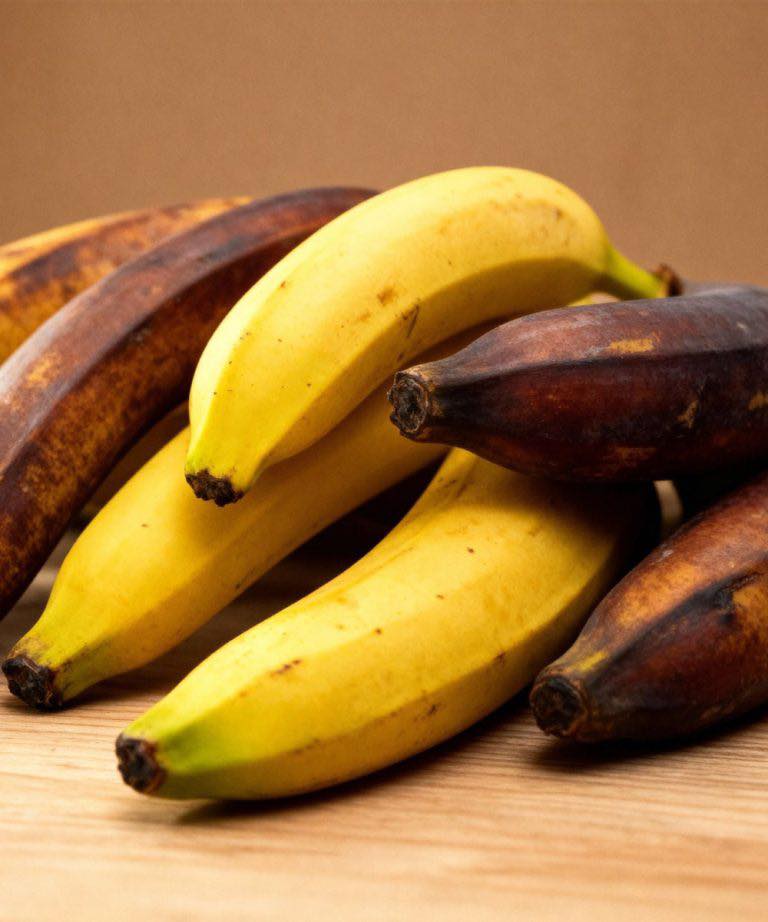
As bananas develop more brown spots, their starches have fully turned into sugars. The texture becomes creamy and ideal for baking or blending.
Best Uses: Baking banana bread, pancakes, or muffins; freezing for smoothies or “nice cream.”
Health Benefits:
Easier to digest for sensitive stomachs.
High in antioxidants that increase as the banana ripens.
A good natural sweetener substitute for refined sugar in recipes.
4. The Overripe Stage: Very Brown or Black — Use Quickly or Freeze
When the peel turns almost entirely dark brown or black, the banana is extremely soft and intensely sweet. It’s still safe to eat as long as there’s no mold, oozing liquid, or foul smell. The inside may look slightly darker, but it’s perfect for blending or baking.
Best Uses: Smoothies, cakes, cookies, or as a natural sugar replacement in recipes.
Tip: Peel and freeze overripe bananas to use later — they’re excellent for smoothies or homemade banana ice cream.
5. When to Throw Bananas Away
Even though dark bananas are usually safe, there comes a point when they’re no longer good for consumption.
You should discard bananas if:
The peel is moldy or has white, fuzzy growths.
The fruit emits a fermented or rotten smell.
The inside is leaking liquid, mushy beyond repair, or has black mold spots inside.
There are fruit flies or signs of decay around them.
At that stage, it’s best to compost them rather than throw them in the trash — turning waste into nourishment for your plants.
Conclusion
Bananas are more than just a snack — they’re a complete food that evolves beautifully with time. Whether you like them firm and green or soft and brown, each stage offers unique benefits.
Learn to embrace every phase of this golden fruit, use what you can, freeze what you can’t — and only discard what nature truly says goodbye to.
So next time you see a bunch like the one in the photo, remember: no banana should go to waste — it just needs the right recipe and the right moment.
No related posts.
ADVERTISEMENT
