
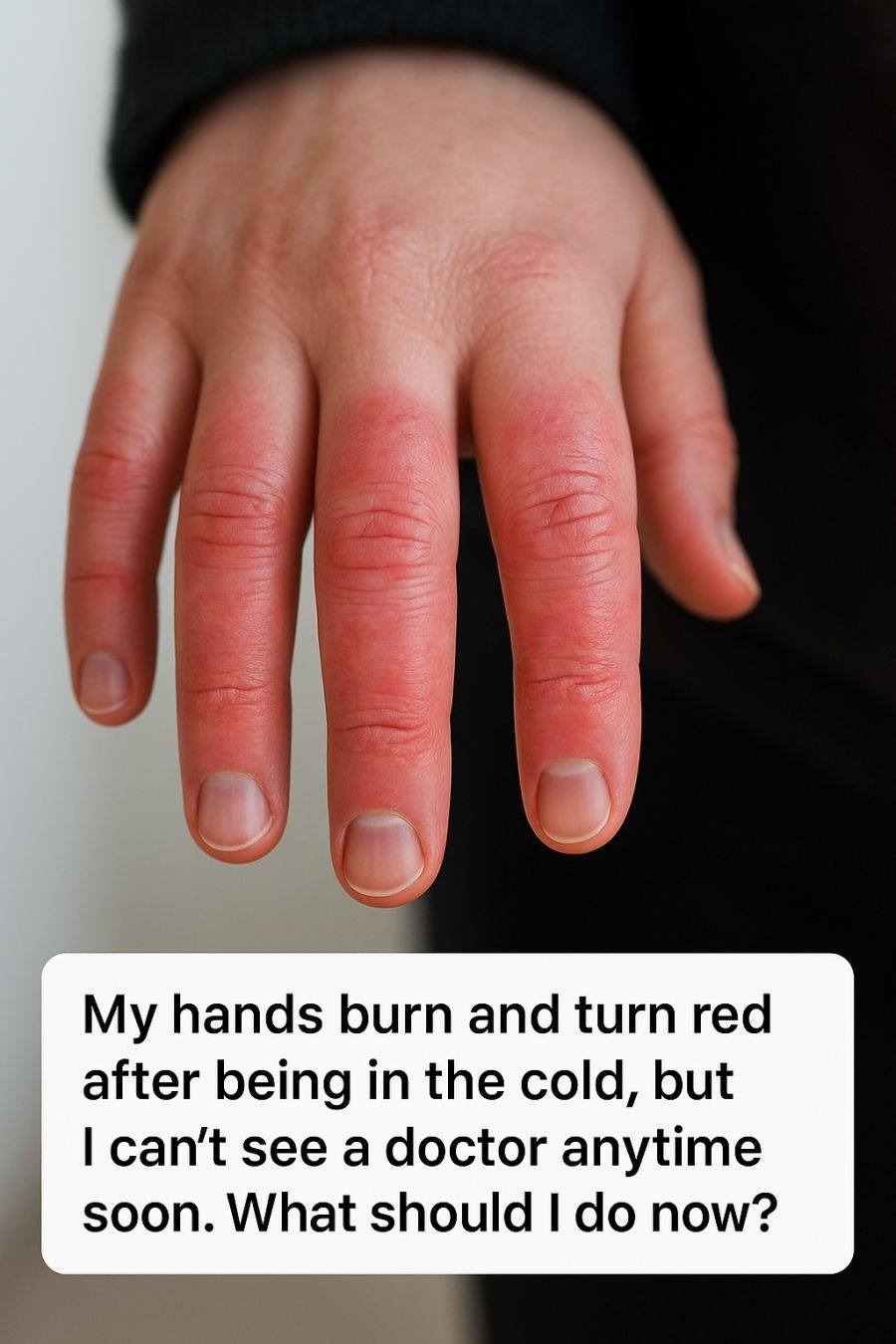
I’m sorry you’re dealing with this—it sounds uncomfortable and concerning. What you’re describing (burning, redness in the hands after cold exposure) could be a sign of Raynaud’s phenomenon, a common condition where blood vessels in the fingers (and sometimes toes) overreact to cold or stress, causing reduced blood flow followed by a reactive “rebound” phase that brings burning, throbbing, and redness as blood rushes back.
While you should see a doctor when possible (to rule out underlying causes like autoimmune conditions), here’s what you can do right now to manage symptoms and protect yourself:
✅ Immediate Steps to Take
1. Warm Your Hands Gently (Do NOT Rub or Use Hot Water)
Run lukewarm (not hot!) water over your hands, or tuck them under your armpits.
Why: Sudden heat can damage sensitive tissues. Gentle warming prevents further irritation.
2. Avoid Triggers
Cold exposure: Wear insulated gloves (even indoors if your home is chilly).
Stress: Practice slow breathing—it can reduce episodes.
Caffeine & nicotine: Both constrict blood vessels—cut back if you use either.
3. Improve Circulation
Wiggle fingers, swing arms in circles, or do light hand exercises to encourage blood flow.
Stay warm overall: Cold core = colder hands. Wear layers, warm socks, and a hat.
🛡️ Prevention Is Key—Protect Your Hands Proactively
Always wear gloves when going outside (even for short trips).
Use hand warmers in pockets or gloves during cold weather.
SEE NEXT PAGE
ADVERTISEMENT
