
“That’s illegal,” Robert said, his voice hardening. “Completely illegal. Does she think —” He stopped. “Did Ryan leave a will? Is that what you’re calling about?”
“Yes,” I whispered. “Please tell me he did.”
“He did. In fact, I was scheduled to bring it to you next week.” He paused. “Why don’t you come to my office right now?”
An hour later, I sat across from Robert as he slid a document across his desk.
“Ryan came to see me about six months ago,” he explained. “He was worried about exactly this scenario.”
I looked down at the will, Ryan’s familiar signature at the bottom sending a fresh wave of grief through me.
“He left everything to you, Catherine,” Robert said gently. “The house, his savings, his investments. Everything.”
I looked up, not daring to hope. “Everything?”
Robert nodded. “Well, almost. He did leave his mother $200,000… but with a condition.” He tapped a paragraph on the second page. “If she ever tried to evict you, take the house, or interfere with your rights to his inheritance, she would forfeit that money.”
“And where would it go?” I asked.
Robert’s smile was grim. “To you and the children.”
For the first time in days, I felt something besides grief. It was small, but it was there… a flicker of justice and hope.
“What do we do now?” I asked.
“Now,” Robert said, reaching for his phone, “we take your house back.”
The emergency court hearing was set for the next day. I spent another night in the car with the kids, but this time, I slept better.
“I need to tell you something important,” I told Emma and Liam over fast-food breakfast the next morning. “We’re going to get our house back today.”
“Really?” Emma’s eyes lit up. “With my room and everything?”
“Everything,” I promised.
“Is Grandma Margaret going to be in trouble?” Liam asked.
I hesitated, then decided on honesty. “Yes, she is. What she did was wrong, and there are consequences for that.”
Liam nodded seriously. “Dad always said we have to take responsibility for our actions.”
My heart squeezed. “He did say that, didn’t he?”
The judge was a stern woman with reading glasses perched on the end of her nose. She listened to both sides — Margaret sputtering indignantly about family rights, and me quietly explaining how we’d been left homeless.
“Ms. Margaret,” the judge finally said, “you had no legal right to change the locks or remove the rightful owners from their property. I’m issuing an immediate order for you to vacate the premises and return all keys to Ms. Catherine by end of day.”
Margaret’s face contorted. “But it’s my son’s house!”
“Which he legally left to his wife,” the judge clarified. “This court doesn’t recognize ‘but I’m his mother’ as a valid legal argument, Ms. Margaret.”
As we left the courtroom, Margaret hurried past me, refusing to meet my eyes.
“This isn’t over,” she hissed.
Robert placed a hand on my shoulder. “Actually, it is. And there’s one more thing she doesn’t know yet.”
By sunset, I had new keys to my house. Robert had sent a locksmith ahead, making sure Margaret couldn’t pull another trick.
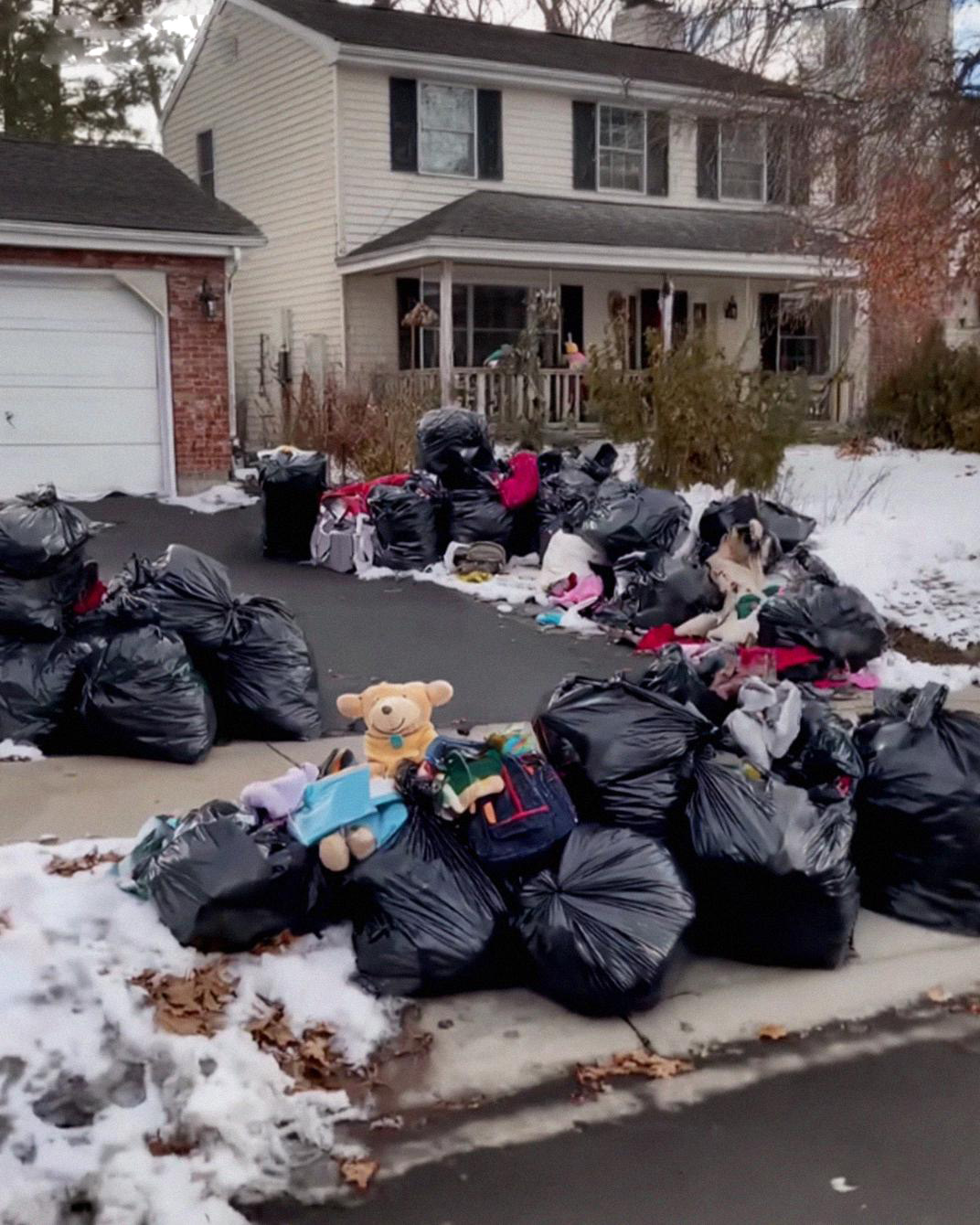
When we pulled into the driveway, the kids tumbled out of the car in excitement, only to stop short at the sight before them. Margaret’s belongings were piled on the curb in the same black trash bags she’d used for our things.
“Mom,” Liam whispered, “did you do that?”
I smiled and before I could answer, another car screeched to a halt behind us. Margaret stormed out, her face purple with rage.
“What is the meaning of this?” she demanded, gesturing wildly at her belongings.
I stepped between her and the children. “You broke into my home and illegally evicted me and my kids. Now, it’s your turn to leave.”
“You can’t do this!” she shrieked.
I held up my new keys. “Oh, but I can. This house belongs to me and my children now. Ryan made sure of that.”
She pulled out her phone. “I’m calling the police.”
see next page
ADVERTISEMENT
