
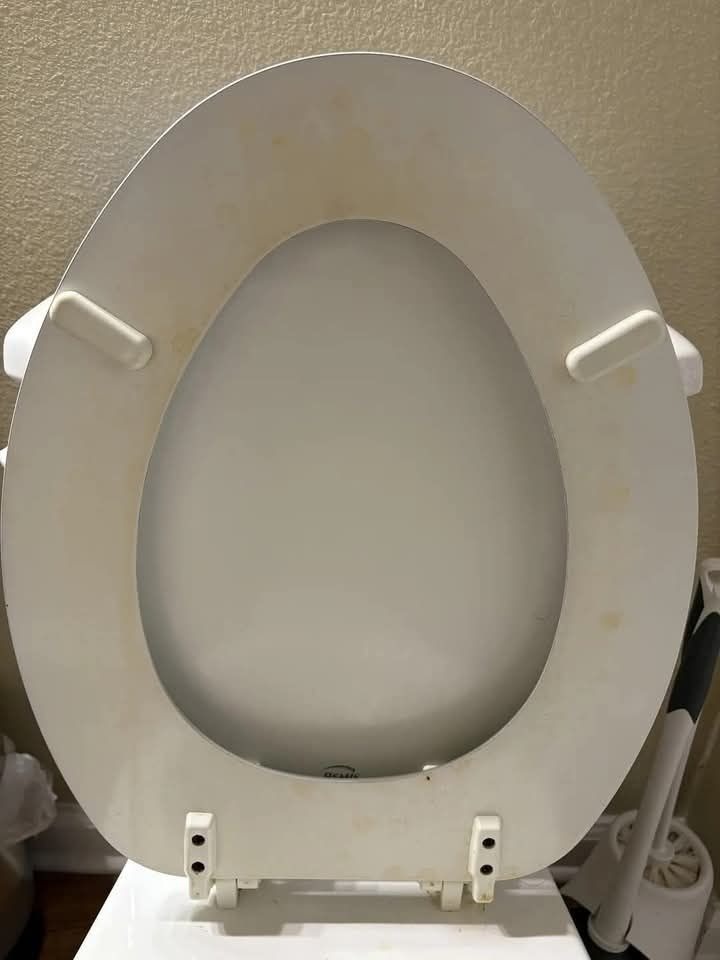
Here’s how:
Flush to lower water level (or use a cup to remove some water).
Pour 2 cups of white vinegar directly onto the stain. Let sit 30–60 minutes (vinegar dissolves minerals and uric acid).
Sprinkle baking soda over the area—it creates a gentle abrasive foam when it hits residual vinegar.
Scrub with a toilet brush (use an old toothbrush for under the rim).
Flush.
💡 For tough stains: Soak paper towels in vinegar, press them onto the stain above the waterline, and leave overnight.
🔥 For Really Stubborn Stains: Pumice Stone (Yes, Really!)
A wet pumice stone (made for toilets—not the facial kind!) is safe on porcelain and glides away mineral buildup without scratching.
Wet the stone and the bowl.
Gently rub the stain in small circles.
Rinse.
⚠️ Never use dry—it can scratch. Always keep it wet.
🚫 What Doesn’t Work (Or Makes It Worse)
Bleach: Kills germs but won’t remove mineral/urine scale—and can even set stains if used alone.
Commercial lime removers: Often contain harsh acids—effective but unnecessary if vinegar works.
Scouring powders: Can scratch porcelain over time, making future stains stick worse.
🛡️ How to Prevent the Ring From Coming Back
Clean weekly—don’t let deposits build up.
Add 1 cup vinegar to the tank once a month (safe for plumbing)—it helps clean with every flush.
Use a toilet bowl cleaner tablet in the tank (not the bowl)—but choose one that’s non-corrosive (like Clorox Ultra Clean).
If you have hard water, consider a water softener or monthly deep-cleaning routine.
❤️ The Bottom Line
That yellow ring isn’t a life sentence—it’s just chemistry meeting neglect. With vinegar, baking soda, and a little patience, you can restore your bowl to bright, clean porcelain.
“A clean toilet isn’t about perfection—it’s about consistency, the right tools, and not letting grime win.” 🚽✨
So grab that vinegar, skip the bleach, and give your toilet the deep clean it deserves. Your future self (and your guests) will thank you!
ADVERTISEMENT
