
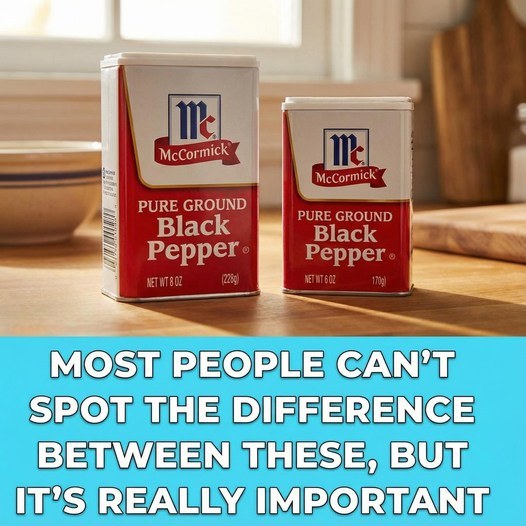
Watkins, however, maintains that visual context matters just as much as printed information. Their products sit on shelves in transparent containers, making it easy for customers to see exactly how much they’re getting. When two brands appear side by side — one opaque and larger, the other smaller but full — it’s not hard to imagine how confusion could arise. They argue that packaging design itself plays a crucial role in shaping expectations, whether companies admit it or not.
This disagreement has ignited a broader conversation among shoppers, especially those who have grown increasingly skeptical about packaging practices across the food industry. Many consumers describe feeling uncertain about how much product they’re actually receiving when container sizes appear unchanged but the contents shrink. The term “shrinkflation” has become common in discussions about food and household items, and spices are no exception. Customers notice when jars feel lighter, when they run out faster, or when their trusted brands begin to subtly adjust quantities without changing the overall look of the container.
At the same time, McCormick insists that their labeling provides full transparency. They point out that it is ultimately the consumer’s responsibility to check the net weight — a number displayed on every package. Companies throughout the industry rely on this standard. Without it, there would be no practical way to compare products. From McCormick’s standpoint, the debate is less about honesty and more about market positioning. They argue that Watkins is using the controversy to draw attention to their own packaging style rather than addressing the fact that ingredient costs, supply chain pressures, and inflation continue to affect producers across the board.
ADVERTISEMENT
