
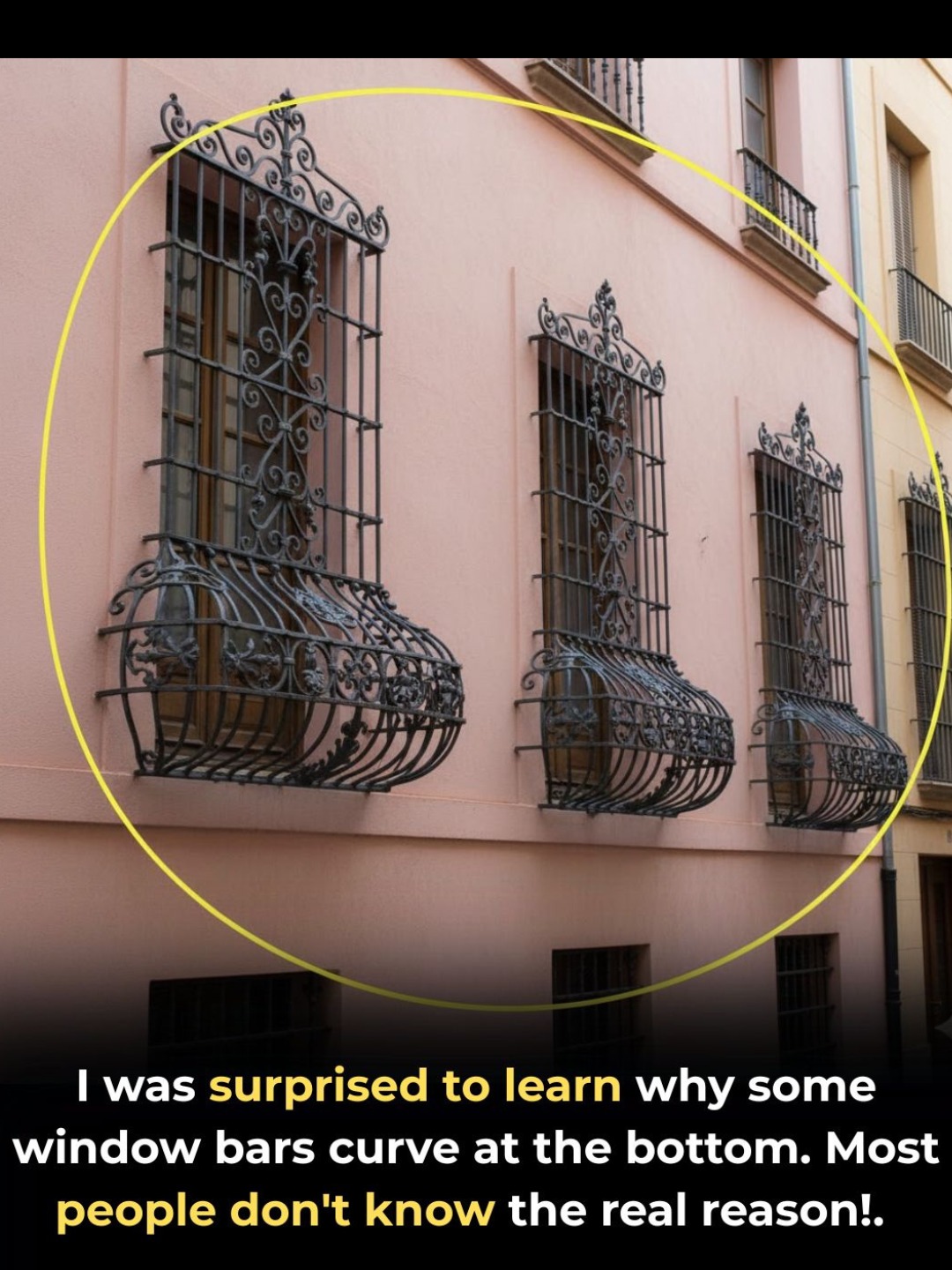
The Surprising Purpose Behind the “Potbelly” Design
You’ve probably seen them while strolling through historic neighborhoods or old city streets: window bars that gently bulge outward, forming a soft, rounded curve like a little belly—often called “potbelly” bars.
At first glance, they look like artistic flair—a whimsical twist on an otherwise utilitarian security feature. But those curves aren’t just for charm.
In fact, the potbelly design is a brilliant fusion of form, function, and urban ingenuity, born from centuries of practical living in dense, vertical cities.
Let’s uncover why these gentle curves exist—and why they’re more than just decorative.
🔒 What Are Window Bars For? (Beyond Security)
Yes, window bars (or grilles) were originally installed for protection—to deter intruders, reinforce weak points in a building, and provide peace of mind, especially on ground-floor windows.
But in places like Italy, Spain, Mexico, the Philippines, and historic U.S. cities (think New Orleans or San Francisco), window bars evolved beyond stark metal grids. They became part of the home’s living space—especially in narrow row houses or apartments where outdoor access was limited.
That’s where the potbelly curve comes in.
SEE NEXT PAGE
ADVERTISEMENT
